At-home beauty devices promise brighter skin, smoother texture, and a salon-like glow. Yet many readers ask, “can at home beauty instruments cause broken capillaries?” The concern is reasonable, especially after noticing thin red lines around the nose or cheeks. These marks may involve dilated superficial vessels, often called telangiectasia. They can look like tiny red threads beneath the skin.
Board-certified dermatologist Dr. Hadley King warns, “Any device that creates heat, suction, or trauma can potentially worsen visible blood vessels in sensitive skin.” Her point matters because devices differ greatly. Intense heat, aggressive suction, repeated scraping, or excessive vibration may irritate fragile skin. A warm device can leave lasting redness. A strong vacuum may create a small circular bruise. That image is easy to remember.
Still, the answer is not perfectly simple. A device may not directly create every broken capillary. Existing rosacea, sun damage, thin skin, steroid use, or genetic sensitivity can increase the risk. Technique matters too. Holding a tool in one place, using maximum power, or treating flushed skin may produce unnecessary stress. I have to admit that “gentle” is not a precise medical measurement. Users often rely on marketing language instead of clinical evidence.
This introduction examines the warning signs, device types, and safer-use habits behind the debate. It also explains when persistent redness deserves professional assessment. Stopping early is sensible. A dermatologist can distinguish temporary irritation from lasting vascular changes and recommend evidence-based care.
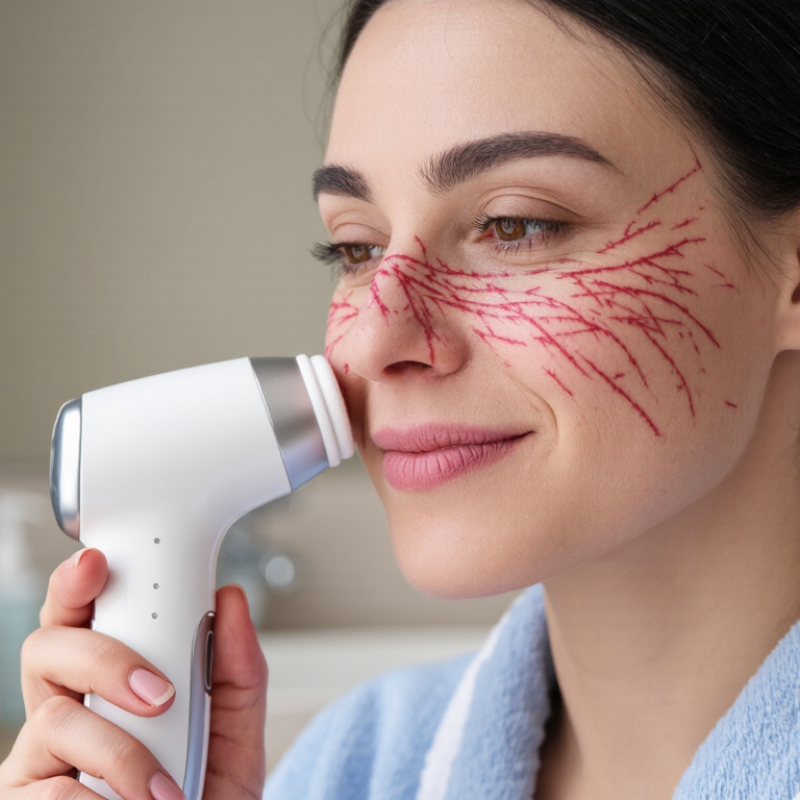
Broken Capillaries and Their Development
Broken capillaries are tiny superficial blood vessels that remain visibly widened near the skin’s surface. They often appear as red, purple, or thread-like lines around the nose, cheeks, and chin. The medical term is telangiectasia. They are usually harmless, but they can indicate repeated vascular stress.
Common triggers include ultraviolet exposure, aging, genetic sensitivity, rosacea, sudden temperature changes, alcohol, and physical irritation. The American Academy of Dermatology reports that rosacea affects about 14 million Americans, although not every rosacea case causes visible capillaries. A 2018 systematic review published in the British Journal of Dermatology estimated rosacea prevalence at 5.46% among adults worldwide. These figures show the issue is common, not necessarily simple.
At-home beauty devices may add another stressor. Heat-based tools can increase flushing, while strong suction or aggressive abrasion may irritate fragile vessels. However, direct research on consumer devices and permanent telangiectasia remains limited. Evidence is still uneven. A warm face after treatment is not automatically a broken capillary. Persistent lines deserve professional assessment, especially with burning, swelling, or frequent flushing. Dermatologists may use close visual examination or dermoscopy before suggesting treatment. I would not assume every red mark has the same cause. That shortcut can lead to unnecessary device use, and sometimes more irritation.
| Topic | What the Evidence Indicates | Potential Relevance to At-Home Devices | Practical Guidance |
|---|---|---|---|
| What are “broken capillaries”? | The common term usually refers to visible, widened superficial blood vessels, medically called telangiectasia. They may appear as fine red lines, branching vessels, or small red spots. | A device may make existing redness more noticeable if it causes temporary inflammation, irritation, or heat-related flushing. It does not necessarily mean that a vessel has literally “burst.” | Persistent facial redness or visible vessels should be assessed based on appearance, symptoms, and medical history rather than by appearance alone. |
| How do they develop? | Contributing factors can include genetics, cumulative ultraviolet exposure, aging, chronic inflammation, rosacea, hormonal changes, alcohol-related flushing, and repeated heat exposure. | Repeated irritation, excessive heat, aggressive suction, or overly intense energy may aggravate vascular redness in susceptible skin. The risk varies by device and user. | Use the lowest effective setting, avoid repeated treatment of the same area, and stop if burning, marked redness, swelling, blistering, or pain develops. |
| Heat-based devices | Radiofrequency, heated tools, and some light-based devices deliver thermal energy. Excessive heat can cause irritation or burns, particularly when used incorrectly. | Heat may temporarily intensify facial flushing and could worsen the appearance of pre-existing vascular redness. Stronger professional vascular treatments are carefully controlled to target blood vessels. | Do not use a device on visibly irritated, sunburned, or recently exfoliated skin. Follow the specified contact time and cooling instructions. |
| LED light devices | Red and near-infrared LED devices are generally designed to produce low levels of non-ionizing light and are not the same as vascular lasers or intense pulsed light. | They are not established as a direct cause of broken capillaries when used as directed, but heat, friction, photosensitivity, or misuse may trigger irritation or flushing. | Use eye protection when required, avoid combining with photosensitizing products unless medically advised, and discontinue use if redness persists. |
| Microdermabrasion and exfoliating devices | Mechanical exfoliation can temporarily increase redness and may damage the skin barrier when pressure, frequency, or abrasion is excessive. | Aggressive use may make existing telangiectasia more visible and can aggravate rosacea-prone or fragile skin. It is not a proven method for removing visible vessels. | Avoid strong suction and repeated passes over visible vessels. Do not use immediately after peels, waxing, sun exposure, or other irritating procedures. |
| Facial vacuum and suction devices | Negative pressure can produce temporary petechiae, bruising, or pinpoint bleeding, especially when suction is strong or held in one place. | These effects may resemble or worsen the appearance of broken capillaries. People taking blood-thinning medication may bruise more easily. | Keep the device moving, use minimal suction, and avoid areas with existing telangiectasia, bruising, active acne, eczema, or broken skin. |
| Microneedling devices | Microneedling intentionally creates controlled micro-injuries. Common short-term effects include pinpoint bleeding, redness, swelling, and sensitivity. | At-home use can increase the risk of infection, scarring, prolonged inflammation, and post-treatment redness when technique or hygiene is inadequate. | Avoid using over visible vessels, active skin disease, or irritated skin. Professional assessment is preferable for persistent redness or vascular concerns. |
| Intense pulsed light and laser devices | Medical laser and intense pulsed light treatments can target blood vessels, but outcomes depend on wavelength, fluence, pulse duration, skin type, and clinical technique. | Unregulated, unsuitable, or incorrectly used light devices may cause burns, pigment changes, eye injury, or worsening redness. Home devices may use substantially lower energy than clinical systems. | Do not assume that a consumer light device is appropriate for facial vessels. Follow safety instructions and seek professional advice for vascular treatment. |
| Skin types and susceptibility | Sensitivity differs according to skin barrier condition, rosacea, medication use, history of easy bruising, sun exposure, and individual vascular reactivity. | A setting tolerated by one person may cause irritation or pigmentary complications in another. Darker skin tones may have a higher risk of post-inflammatory hyperpigmentation after some light or heat treatments. | Perform a patch test when appropriate, protect skin from ultraviolet exposure, and obtain medical advice if you have rosacea, photosensitivity, or a bleeding disorder. |
| Are broken capillaries permanent? | Some temporary redness fades after irritation resolves, while established telangiectasia may persist without targeted treatment. | Stopping an irritating device may prevent further aggravation, but it may not remove vessels that are already visibly enlarged. | A dermatologist can distinguish telangiectasia from rosacea, acne-related redness, dermatitis, or other vascular lesions and discuss suitable treatment options. |
| Warning signs after treatment | Severe pain, blistering, crusting, spreading swelling, persistent discoloration, eye symptoms, or redness that does not improve may indicate a significant injury or another condition. | These findings are not typical of mild, short-lived post-treatment flushing and should not be managed by increasing treatment intensity. | Stop using the device and seek prompt medical advice. Obtain urgent care for vision changes, severe swelling, extensive blistering, or signs of infection. |
Note: “Broken capillaries” is a non-medical term commonly used for visible superficial blood vessels. Device safety depends on the technology, energy level, treatment area, skin condition, and correct use. This table is general educational information and does not replace professional medical advice.
Broken capillaries are tiny widened blood vessels near the skin’s surface. They may look red, purple, or thread-like. Common areas include the nose, cheeks, and chin.
Ultraviolet exposure, aging, genetic sensitivity, rosacea, and sudden temperature changes may contribute. Physical irritation can add stress. The exact cause is not always obvious.
Heat may increase facial flushing. Strong suction, vibration, or abrasion may irritate fragile vessels. Direct research remains limited. A warm face is not automatically damaged.
Rosacea, naturally thin skin, and previous visible veins may increase sensitivity. Recent sun exposure or windburn can weaken the skin barrier. Chemical exfoliation may also matter.
High settings, firm pressure, and holding a tool in one place can create unnecessary trauma. Using dry skin may increase friction. Repeating treatments before redness settles is risky.
Use gentle settings and avoid damaged or irritated skin. Move the device carefully without pressing hard. Protect the face from sunlight. Stop when the reaction feels unusual.
Temporary redness often fades after treatment. Persistent red lines may indicate visible widened vessels. Burning, swelling, or frequent flushing deserves more attention. Not every red mark has the same cause.
See a qualified dermatologist for persistent lines, burning, swelling, or easy bruising. Close visual examination or dermoscopy may help. Guessing can lead to unnecessary irritation.
Broken capillaries are small, visible blood vessels that can appear as red lines or patches, especially on the cheeks and around the nose. They may develop when delicate facial vessels are repeatedly exposed to heat, pressure, suction, intense light, or sudden temperature changes. This raises an important question: can at home beauty instruments cause broken capillaries? Devices that use warming functions, vacuum extraction, strong massage, or concentrated light may irritate or stress fragile vessels when used too often, at excessive intensity, or on already sensitive skin.
Risk may be higher for people with rosacea, thin or reactive skin, a history of easy flushing, sun damage, or existing visible vessels. To use beauty devices more safely, follow the instructions, begin with the lowest suitable setting, avoid prolonged treatment over red areas, and never press or pull the skin aggressively. Keep the device moving when appropriate, stop if you feel burning or see persistent redness, and allow the skin to recover between sessions. If visible vessels worsen, seek advice from a qualified medical professional.

 Luminor Beauty