Choosing among China’s top 10 beauty tools can feel confusing, especially when your skin reacts to fragrance, heat, pressure, or vibration. Sensitive skin needs more than attractive design and impressive claims. It needs controlled use, simple materials, and clear safety instructions. A cooling roller may soothe morning puffiness, while a strong cleansing brush may leave redness after one minute. Small differences matter.
This guide explains how to choose the right beauty instrument for sensitive skin through practical, evidence-informed criteria. We will examine contact materials, intensity settings, temperature control, cleaning requirements, and suitable skin conditions. Product descriptions and customer reviews can help, but neither replaces professional medical advice. Check the manufacturer’s instructions carefully. Look for transparent specifications, responsive customer support, and appropriate safety certifications for your market.
A gentle tool is not automatically suitable. It may still cause irritation when used too often or with an unsuitable serum. Patch testing remains sensible. Start slowly. Stop if burning, swelling, persistent itching, or worsening redness appears. People with rosacea, eczema, active acne, or damaged skin should consult a qualified dermatologist before trying advanced devices. No ranking is perfect. Individual tolerance differs, and even expert recommendations need personal adjustment. The following selection aims to make comparison clearer, not promise identical results for everyone. Expect thoughtful choices, careful use, and occasional reconsideration.
What Makes Skin Sensitive and Why Tool Choice Matters
China Top 10 Beauty Tools: How to Choose for Sensitive Skin?
Sensitive skin is not simply “weak skin.” It often reacts to friction, heat, pressure, fragrance, or sudden product changes. International Journal of Dermatology reviews report self-described sensitive skin in about 50–70% of adults, depending on the population studied. That range is wide. The inconsistency matters. A tingling face may signal irritation, dryness, allergy, or an underlying condition.
When comparing China’s top ten beauty tools, examine contact surfaces before appearances. Choose rounded edges, adjustable intensity, washable materials, and cool operation. Avoid rough bristles, sharp scraping surfaces, and strong vibration during flare-ups. The American Academy of Dermatology recommends gentle cleansing and fragrance-free care for easily irritated skin. A tool should glide over damp skin, not drag it. Keep sessions short, perhaps two minutes at first.
Clean the device after every use, especially around the nose and jawline. Residue can increase irritation and microbial buildup. Stop when burning, swelling, or persistent redness appears. Do not “push through.”
I have seen users mistake stronger sensation for better performance. That assumption needs challenging. Patch-test one area, record the reaction, and introduce only one tool at a time. Dermatology guidance cannot replace an examination, particularly when sensitivity continues for several weeks.
China’s Top 10 Beauty Tools for Sensitive Skin
China’s Top 10 Beauty Tools for Sensitive Skin require gentleness, hygiene, and realistic expectations. Grand View Research valued the global beauty devices market at about USD 32.2 billion in 2022. However, fast growth does not prove every device suits reactive skin. A tool should reduce friction, heat, pressure, and ingredient transfer.
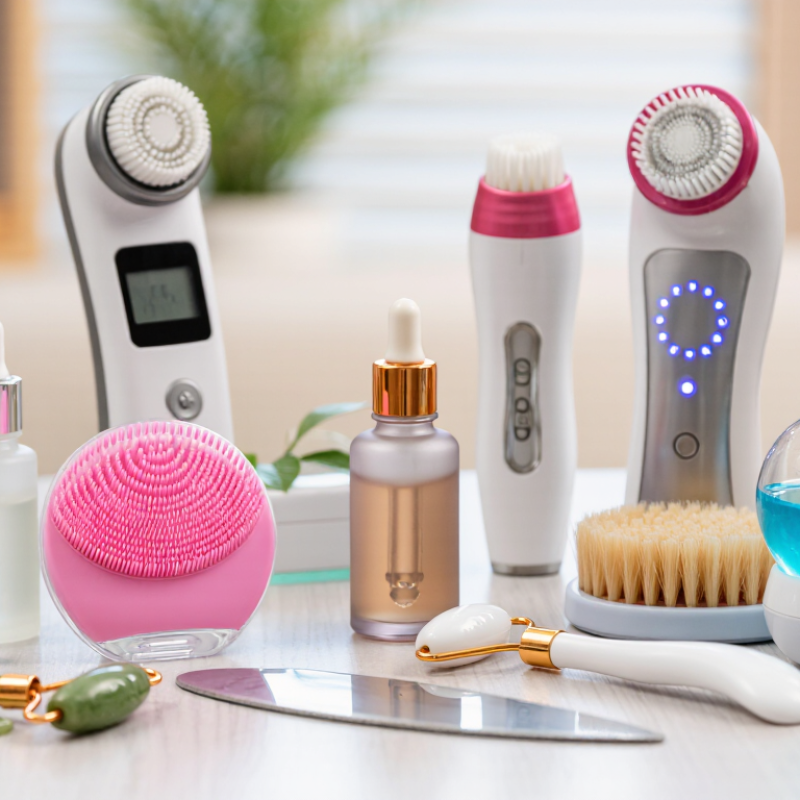
The ten practical choices are a soft silicone cleansing brush, cooling metal roller, smooth gua sha plate, chilled facial globes, low-vibration cleansing pad, ultrasonic spatula, red-light mask, scalp massage comb, wide-tooth detangling comb, and clean makeup sponge. Silicone surfaces are easier to rinse than fabric. Rounded edges matter. Use the cooling tools for short periods, never on numb skin. Gua sha requires almost no pressure. Red-light devices need eye protection and careful timing.
The American Academy of Dermatology recommends patch testing new products and choosing fragrance-free formulas, which also applies to tool-related skincare. A 2024 Euromonitor International report describes facial skincare as a major category in China’s beauty market, but purchasing popularity is not proof of safety. Check material disclosure, cleaning instructions, heat settings, and return policies. Avoid rough bristles, strong suction, needles, and unverified electrical claims. I have sometimes used a tool too often, mistaking mild redness for effectiveness. That was poor judgment. Sensitive skin can need fewer steps, not more gadgets. Stop when burning, swelling, or persistent redness appears.
Key Features to Check Before Buying a Beauty Tool
China Top 10 Beauty Tools: How to Choose for Sensitive Skin?
Key Features to Check Before Buying a Beauty Tool
Sensitive skin needs fewer surprises. Check the tool’s contact material before considering its appearance or price. Smooth, non-porous surfaces are easier to clean and less likely to trap residue. Avoid rough edges, peeling coatings, and strong chemical smells. These details may signal poor quality or uncomfortable contact. Choose adjustable intensity, especially for cleansing brushes, massagers, and light-based devices. The lowest setting should feel gentle, not weak or useless. Heat settings also need careful control. Warmth can quickly become irritation on reactive skin.
Look for clear instructions, cleaning guidance, and accessible safety information. A tool should explain recommended use time, charging safety, and areas to avoid. Independent safety testing is a useful sign, but vague claims deserve caution. Try a small patch of skin first, then wait a full day. Do not test a new tool after exfoliation or sun exposure. Keep the device clean and never share it without proper disinfection. I have found that convenience often hides maintenance work. A waterproof design may still need careful drying around seams. Replace damaged heads or cracked surfaces promptly. If redness, burning, or swelling appears, stop using the tool. Sensitive skin does not always react immediately, which makes patience important. Pain is not proof of effectiveness.
China Top 10 Beauty Tools: How to Choose for Sensitive Skin?
Compare the relative irritation risk of common beauty tools before buying. Lower scores generally indicate less friction, pressure, heat, or skin-barrier disruption when the tool is used correctly.
Key features to check: adjustable intensity, smooth or non-abrasive contact surfaces, easy cleaning, short treatment times, and built-in temperature or pressure control. Patch-test new devices and follow the manufacturer’s instructions, especially if the skin is irritated or medically sensitive.
How to Match Each Tool with Your Skin Sensitivity
Choosing among China’s top ten beauty tools matters less than matching each tool to your sensitivity level. A silicone cleansing brush suits mildly sensitive skin when used with low pressure. A soft facial sponge is gentler, but replace it often. Jade rollers and gua sha tools can feel calming on normal or reactive skin. Use them over moisturiser, not dry skin. Keep movements light.
Steamers may soften buildup, yet heat can trigger redness, rosacea, or stinging. Sensitive users should avoid them or choose brief, lukewarm sessions. LED masks require careful instructions and eye protection. Stop if warmth or discomfort appears.
Microcurrent devices may suit experienced users, but broken skin and active irritation need a pause. An ultrasonic spatula can help oily, resilient skin, while fragile skin may prefer occasional use. Eye massagers should never press the eyelids. Makeup sponges and cleansing pads need frequent washing.
Tips: Patch-test one tool on the jawline for 24 hours. Start once weekly. Use fragrance-free products with it. Avoid combining exfoliating tools with acids or retinoids on the same day. A soft towel should not leave lasting redness. If burning continues, stop and seek advice from a qualified dermatologist. I have found that “gentle” is not universal; even a smooth roller can irritate skin when pressure, speed, or hygiene is wrong. Keep a simple reaction diary. Your skin may change with weather, stress, or medication.
Safe Use, Cleaning, and Replacement Guidelines
China Top 10 Beauty Tools: How to Choose for Sensitive Skin?
Sensitive skin needs fewer surprises. Choose tools with smooth, non-porous surfaces and adjustable intensity. Avoid rough edges, strong vibration, and heated parts that stay hot against the cheeks. The American Academy of Dermatology recommends testing new products on a small skin area before regular use. Try the inner forearm for several days. Stop after burning, swelling, or persistent redness. “Gentle” is not a guarantee.
Cleaning matters more than attractive packaging. ISO 17516:2014 sets microbiological quality expectations for cosmetic products, reminding users that contamination control is essential. Wash reusable heads after each use with mild soap and lukewarm water. Rinse completely, then air-dry on a clean towel. Do not share tools. Never store damp devices in closed cases. A 2023 survey published in the International Journal of Dermatology reported that self-perceived sensitive skin is widespread, affecting more than half of respondents in several populations. That makes hygiene practical, not cosmetic.
Replace cracked surfaces, loose attachments, stained silicone, or bristles that remain misshapen. Follow the maker’s replacement schedule when available, because material quality varies. I would not trust a tool simply because it still turns on. Keep a small cleaning log. It feels excessive, but missed cleaning is easy. If irritation continues, pause every device and consult a qualified dermatologist.
FAQS
Choose smooth, rounded surfaces that reduce friction, heat, and pressure. Silicone is easy to rinse. Popularity is not proof of safety.
A soft silicone brush or low-vibration pad may suit mildly reactive skin. Use low pressure once weekly at first. A soft sponge can feel gentler, but replace it often.
Use them briefly on moisturized skin with light strokes. Never use a tool on numb skin. Stop if stinging or lasting redness appears.
It may suit reactive skin when used over moisturizer, not dry skin. Apply almost no pressure and move slowly. I once pressed too hard. That was unnecessary.
Heat may trigger redness, flushing, or stinging. Avoid steamers, or choose a brief lukewarm session. Warmth is not always helpful.
Follow the device instructions and use eye protection when required. Avoid irritated or broken skin. Stop when warmth, burning, or discomfort appears.
Wash makeup sponges and cleansing pads frequently. Rinse silicone surfaces thoroughly and follow cleaning instructions. Let tools dry completely. Damp tools can collect buildup.
Test it on the jawline for 24 hours before wider use. Start once weekly and choose fragrance-free products. Avoid combining exfoliating tools with acids or retinoids.
Stop after burning, swelling, or persistent redness. Keep a simple reaction diary. Skin may change with weather, stress, or medication. Seek qualified dermatology advice if symptoms continue.
Conclusion
Sensitive skin can react easily because of a weakened skin barrier, dryness, allergies, inflammation, or excessive exposure to heat, friction, and active ingredients. Choosing the right beauty tool is therefore essential for maintaining comfort and preventing redness or irritation. This guide explains how to choose the right beauty instrument for sensitive skin by focusing on gentle operation, adjustable intensity, smooth and skin-friendly materials, low heat, and easy cleaning. It introduces ten commonly available beauty tool types in China, including cleansing brushes, cooling rollers, facial massagers, mist devices, and light-based tools, while emphasizing that suitability depends on individual skin condition rather than popularity.
Before buying, users should check safety instructions, power settings, contact materials, waterproof design, and replacement requirements. Each tool should be matched carefully with personal sensitivity: use minimal pressure, short sessions, and avoid damaged or inflamed areas. Proper cleaning after every use, regular inspection, and timely replacement of worn components can reduce bacterial buildup and unnecessary irritation. When discomfort occurs, stop immediately and allow the skin to recover.

 Luminor Beauty